
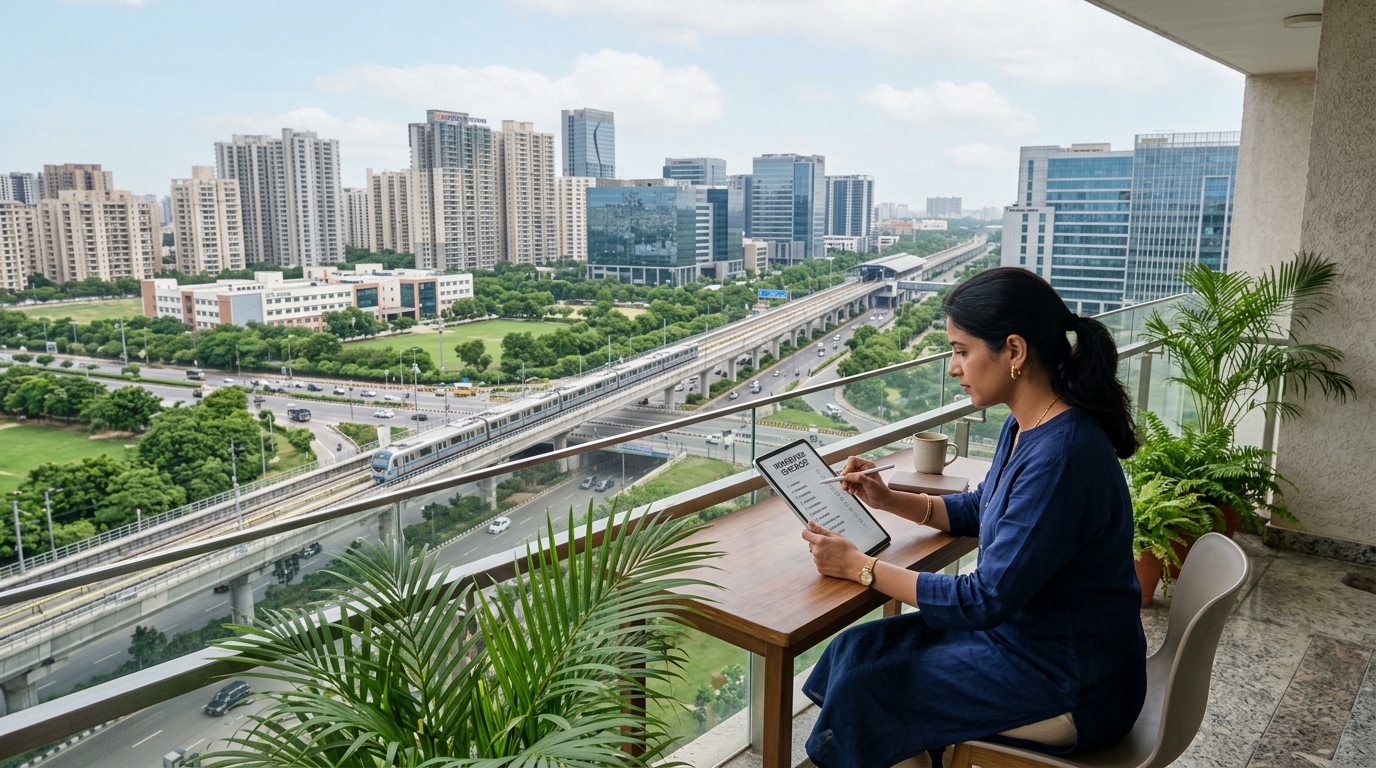
The best city to live in is not just about rankings. This guide explains how Indian homebuyers should compare jobs, infrastructure, legal clarity and lifestyle before investing.
When people search for the best cities to live in India, they often look for a simple ranking. In reality, a good city for living and a good city for buying property are related, but not always the same.
The research source available for this article was under maintenance, so no city-wise ranking or official livability list could be verified from that page. Wherever a data point is not directly sourced, this article avoids making factual claims and instead focuses on a practical framework for homebuyers and investors. Independently verify before making an investment decision.
For buyers in Noida, Greater Noida, Yamuna Expressway, YEIDA and Delhi NCR, this topic matters because location selection affects not just lifestyle, but also rental demand, capital appreciation, commute quality, school access, and eventual resale.
Instead of chasing a viral list, use the checklist below to judge whether a city is genuinely suitable for end-use or property investment in the Indian market.
Why livability matters in real estate
Livability is not only a lifestyle concept. In property decisions, it directly influences:
- End-use comfort for families, working professionals and senior citizens
- Rental yield potential in areas with sustained tenant demand
- Capital appreciation when infrastructure and jobs improve over time
- Resale liquidity because better liveability usually widens the buyer pool
A city can be good to live in, but not ideal for every buyer
A premium metro may offer strong social infrastructure, but high entry cost can stretch budgets. On the other hand, a developing micro-market may offer better affordability, but possession timelines, connectivity and civic readiness become more important.
For this reason, buyers should compare livability + affordability + legal clarity together, not in isolation.
How to assess the best city for buying a home
Before shortlisting any city, ask practical questions:
1) Employment and economic base
A city with diverse employment drivers generally supports healthier housing demand. Look for:
- IT, manufacturing, logistics, education, healthcare or government-led demand
- Presence of large business districts or industrial corridors
- Stable migration inflow of students and professionals
2) Connectivity and daily commute
Check whether the city offers:
- Metro, expressway or railway access
- Airport connectivity where relevant
- Reasonable travel time to work hubs
- Last-mile public transport or strong road network
3) Social infrastructure
Families should review:
- Schools and colleges
- Hospitals and emergency services
- Retail, parks and community spaces
- Water, power and waste-management quality
4) Affordability versus quality
The cheapest city is not automatically the best buy. Compare:
| Factor | What to Check | |---|---| | Budget fit | Total outflow including GST, registry, parking, maintenance and interiors | | Unit usability | Carpet area, layout efficiency, sunlight, ventilation | | Holding power | Whether EMI burden is manageable for 3-5 years | | Exit potential | Future buyer demand in the same segment |
5) Legal and title safety
This is non-negotiable. Verify:
- RERA registration where applicable
- Land title and ownership chain
- Whether the asset is freehold or leasehold
- Approved layout and sanctioned building plans
- Possession terms, payment plan and penalty clauses
If any developer or seller claim cannot be independently checked, Independently verify before making an investment decision.
What buyers in Noida, Greater Noida and YEIDA should compare
For Delhi NCR buyers, city-level comparison should go one layer deeper into micro-markets.
Noida
Noida is often evaluated for established sectors, metro access, office demand and mature social infrastructure. Buyers usually compare older ready-to-move locations with newer launches based on budget and registry comfort.
Greater Noida
Greater Noida attracts buyers looking for wider roads, planned sectors and relatively larger unit sizes in many locations. However, project execution, occupancy levels and actual daily convenience should be checked sector by sector.
Yamuna Expressway / YEIDA
This belt is closely watched for long-term growth themes linked to infrastructure and regional development. But buyers should distinguish between future potential and present liveability. A location may look attractive on a map, yet practical issues like current occupancy, transport access and nearby services matter for end-users.
Key local due diligence points
- Authority norms and land-use status
- Distance from operational schools, hospitals and markets
- Registry readiness for the specific asset
- Actual road connectivity, not brochure distance alone
- Maintenance quality in occupied projects
A sensible buyer compares not just project brochures, but the lived reality of the area.
Common mistakes people make when chasing 'best city' lists
City rankings can be useful starting points, but they should not replace due diligence.
Mistake 1: Confusing hype with habitability
A city in the news may not suit your work pattern, family needs or budget.
Mistake 2: Looking only at launch price
Entry price matters, but so do maintenance costs, commute costs, fit-out expenses and time value if possession is delayed.
Mistake 3: Ignoring legal structure
Many buyers focus on amenities but overlook title quality, lease terms, RERA disclosures and possession conditions.
Mistake 4: Assuming infrastructure guarantees returns
Infrastructure can improve a market, but it does not ensure immediate resale gains or rental demand. Independently verify before making an investment decision.
Mistake 5: Not visiting at different times
A site visit during one weekend afternoon reveals very little. If possible, visit on a weekday peak hour and after dark to judge traffic, occupancy and area activity.
A simple checklist to choose the right city and micro-market
Use this practical scorecard before booking or purchasing:
Buyer checklist
- Is the city aligned with your job location or long-term family plan?
- Is the property within safe EMI or funding limits?
- Is the project or plot legally clear and properly documented?
- Is the area already liveable, or are you depending on future development?
- Does the asset suit your goal: self-use, rental income or long-term appreciation?
For end-users
Prioritise:
- Commute time
- Water and power reliability
- School and hospital access
- Occupancy and community quality
For investors
Prioritise:
- Tenant demand drivers
- Entry price discipline
- Supply pipeline in the same corridor
- Exit options after possession or registry
The best city is ultimately the one where your objective, budget and risk tolerance align most sensibly.
Key Takeaways
- A good city for living is not always the best city for buying property at your budget.
- Livability should be assessed alongside jobs, connectivity, social infrastructure and legal clarity.
- In Delhi NCR, compare micro-markets like Noida, Greater Noida and YEIDA separately.
- Always verify RERA details, title, freehold or leasehold status, and registry readiness.
- Do not rely only on rankings or future promises; site visits and document checks are essential.
Frequently Asked Questions
How should I judge the best city to live in India for buying property?
Look beyond rankings. Compare employment base, connectivity, social infrastructure, affordability, RERA compliance and resale or rental demand before deciding.
Is a highly livable city always a good investment destination?
Not necessarily. A city may offer a good lifestyle but still have high entry cost, low rental yield or limited upside in your budget segment.
What matters more: city selection or project selection?
Both matter, but city selection sets the broader demand environment while project selection determines execution, legal comfort and day-to-day usability.
Should I prefer ready-to-move or under-construction homes in a new city?
Ready-to-move homes reduce possession uncertainty and let you assess actual liveability. Under-construction options may offer different pricing dynamics, but legal and timeline checks become even more important.
What should buyers in YEIDA or Yamuna Expressway verify first?
Check authority-related documentation, land-use status, exact connectivity, occupancy around the project and actual access to daily necessities. Independently verify before making an investment decision.
Conclusion
There is no universal answer to the question of the best cities to live in India. The right choice depends on whether you are buying for self-use, rental income, retirement, or long-term capital appreciation.
For most buyers, the smarter approach is to evaluate a city through a real-estate lens: employment strength, infrastructure, social convenience, legal certainty and affordability. In markets like Noida, Greater Noida and YEIDA, this city-level view should always be followed by detailed micro-market and project-level due diligence.
A ranking can help you start the search, but it should never replace verification, site visits and document review.
If you are comparing Noida, Greater Noida or Yamuna Expressway for your next property decision, NeeVAasha can help you evaluate location suitability, project documents and on-ground realities before you commit.
Talk to Rahul directly.
Have a specific question about this topic? Book a no-obligation call with Neevaasha's founder — 15 years of NCR real-estate experience, one honest conversation.


