
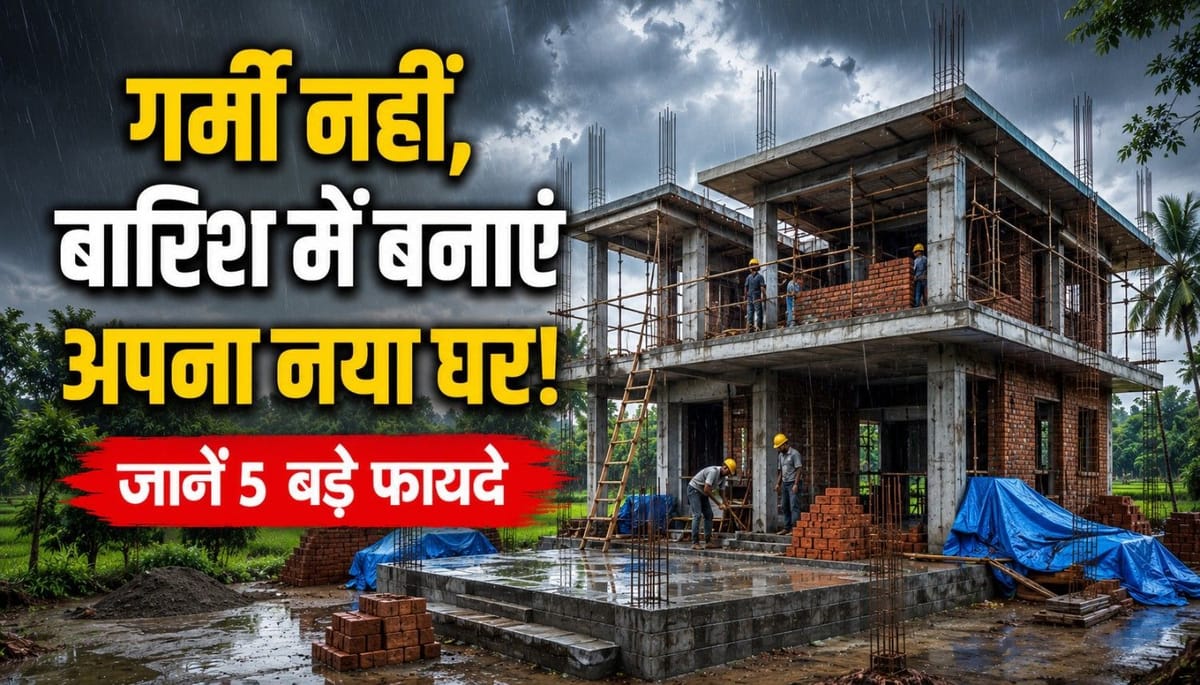
Building during monsoon is possible, but only with tight planning and quality control. Here is a practical Noida-focused guide for plot buyers and self-build homeowners.
Many buyers in Noida, Greater Noida and the Yamuna Expressway region purchase a plot with the intention of starting construction as soon as possible. But once the monsoon arrives, a common question comes up: should you continue building, slow down, or wait for clearer weather?
The source page provided for research was unavailable due to maintenance, so this article is written as a general real-estate and construction guidance piece rather than a summary of that page. Because local soil conditions, drainage patterns, contractor capability and approval status can vary from one sector to another, some practical points below are opinion-based best practices. Independently verify before making an investment decision.
In Indian real estate, construction timing affects more than just site convenience. It can influence material storage, labour productivity, waterproofing performance, curing quality, cost control and even your possession timeline. For buyers constructing on residential plots in Noida, Greater Noida or YEIDA-notified areas, seasonal planning matters.
This guide explains when monsoon construction can work, where the risks are higher, what checks plot owners should insist on, and how to protect both build quality and budget. Whether you are building a self-use home, a builder floor, or a rental-focused unit, these tips will help you ask better questions before work begins.
Should You Build a House During the Monsoon?
The short answer is: it depends on the construction stage.
Monsoon does not automatically make construction impossible. In fact, some stages can continue with proper planning. The real issue is whether your site, design and contractor are prepared for rain interruptions.
Stages that may face higher difficulty
- Excavation and foundation work on sites with weak drainage
- Basement or underground tank work where water accumulation is likely
- Brickwork and external plaster during continuous heavy rain
- Waterproofing applications if surfaces cannot remain dry as required by the product method
Stages that can often continue with controls
- Structural work under supervised conditions
- Steel fabrication and shuttering preparation
- Internal services planning such as electrical and plumbing routing
- Procurement, approvals and budgeting activities
A practical decision rule
Ask these three questions before proceeding:
- Does the plot retain water after rain?
- Does your contractor have a monsoon work plan?
- Can materials be stored safely under cover?
If the answer to any of these is no, delays and rework become more likely.
For Noida and Greater Noida plot buyers, site conditions vary significantly by sector and road level. A plot on a developed road with proper stormwater slope behaves very differently from a newly developing pocket where surrounding infrastructure is still catching up. This is why monsoon planning should start with a site-specific assessment, not a generic yes-or-no answer.
Key Risks of Rainy-Season Construction Homeowners Must Understand
Monsoon construction risk is mostly about quality control, not just inconvenience.
1) Waterlogging and soil instability
If rainwater accumulates around excavation areas, the soil can soften, side slopes may weaken, and foundation work may need redesign or repeated dewatering. In low-lying plots, this can also affect neighbouring properties.
2) Cement and material damage
Cement exposed to moisture can lose performance. Sand may contain excess water, which affects mix proportion if not adjusted. Bricks stored directly on wet ground may absorb water or get damaged.
3) Poor workmanship under time pressure
A frequent issue is rushed execution between rain spells. Contractors may try to "finish quickly" without allowing proper surface preparation, curing discipline or waterproofing checks.
4) Delays that increase total cost
Even if rates do not officially change, unplanned rain stoppages may increase labour inefficiency, pumping costs, tarpaulin use, storage expense and supervisor visits.
5) Dampness issues later
If terrace treatment, external plaster joints, window sealant zones and plumbing sleeves are not handled correctly, the visible problem may appear only after possession.
6) Safety hazards on site
Slippery surfaces, exposed wiring, unstable scaffolding and partially flooded pits create safety risks for workers and owners visiting the site.
Real-estate angle for end users and investors
If you are constructing for self-use, poor monsoon planning can affect long-term comfort and maintenance. If you are building for rental yield or resale, construction defects can delay possession, reduce marketability and weaken buyer confidence during due diligence.
Best Monsoon Season Home Construction Tips for Noida, Greater Noida and YEIDA
If your project must continue in the rainy season, focus on controls rather than assumptions.
Start with drainage before structure
Ensure temporary site drainage is created before major work begins.
Checklist:
- Provide a path for rainwater runoff
- Keep excavation edges protected
- Arrange a water pump if required
- Avoid dumping debris in natural outflow lines
Store materials scientifically
Material loss during monsoon is a preventable expense.
Good practice:
- Store cement on raised wooden pallets
- Keep bags away from walls and cover them fully
- Protect steel from standing water and mud contamination
- Store aggregates separately so mix design remains manageable
- Keep electrical fittings and finishing materials in dry storage
Recheck concrete and mortar practice
Rain affects moisture levels in sand and aggregate. Your engineer or contractor should adjust water addition accordingly. This is a technical area; do not rely only on site habit. Independently verify before making an investment decision.
Do not compromise on waterproofing sequence
Many owners think waterproofing is a single product purchase. In reality, performance depends on:
- surface preparation,
- joint treatment,
- slope creation,
- pipe sleeve sealing,
- terrace detailing, and
- curing or drying requirements.
Use stage-wise quality inspections
At minimum, inspect and document these stages:
- Excavation and footing condition
- Reinforcement before concrete pour
- Slab casting day arrangements
- Terrace and wet-area waterproofing
- External wall crack and joint treatment
- Plumbing pressure tests
Keep written records
Even in a self-build project, maintain:
- contractor scope sheet,
- payment milestones,
- material purchase bills,
- site photos,
- variation approvals.
This helps in disputes, resale documentation and future maintenance.
Plan buffer time into possession expectations
If your family expects a fixed shifting date, monsoon work can create pressure that leads to poor decisions. A realistic buffer is safer than hurried finishing.
Plot Buyers: Legal, Approval and Documentation Checks Before Construction
Construction quality is only one side of the story. In NCR micro-markets such as Noida, Greater Noida and YEIDA, buyers must also check the legal and regulatory side before starting any work.
Confirm title and tenure
Check whether the plot is freehold or leasehold and understand transfer conditions, if any. This can affect financing, transfer, mutation and long-term flexibility.
Verify layout and authority norms
Before construction, confirm approved building norms applicable to your plot size and location. These may include setback rules, height limits, ground coverage and parking provisions.
Sanctioned building plan matters
Do not begin structural work without the required building plan approval from the relevant authority or competent body, wherever applicable. Unapproved deviations can create problems at the time of inspection, utility connection, resale or registry-related due diligence.
Check if the area has RERA relevance
A pure self-construction on an individually owned plot may not always fall into the same category as a developer-led project, but if your arrangement involves plotted development, builder floors, or a larger marketed scheme, RERA implications may arise. Buyers should understand who is the promoter, what is being sold, and whether registration requirements apply. Independently verify before making an investment decision.
Review cost assumptions beyond construction
Plot owners often focus only on contractor rates. But the total budget may also include:
- sanction fees,
- architect and structural consultant charges,
- labour welfare or site compliance costs,
- utility connection deposits,
- boundary and gate work,
- finishing upgrades,
- drainage correction if road level is high.
Keep future resale in mind
A properly documented house with sanctioned plans, bills and completion records is easier to market later. Buyers in the secondary market increasingly ask for clarity on approvals, construction age and quality.
How Monsoon Construction Affects Budget, Rental Yield and Capital Appreciation
From an investment point of view, rainy-season construction should be evaluated through holding cost, quality risk and timeline impact.
Budget impact
Monsoon may not always make construction more expensive on paper, but hidden costs can rise due to:
- slower execution,
- repeated transport,
- material protection expense,
- rework,
- site pumping,
- weather-related labour downtime.
Rental yield impact
If your goal is to create a rental unit, a delayed or defect-prone build can postpone tenant onboarding. Dampness, seepage and poor ventilation also reduce tenant satisfaction and may increase maintenance calls.
Capital appreciation angle
In markets such as Noida Extension, Greater Noida and YEIDA sectors, long-term capital appreciation depends not only on location but also on build quality and usability. A structurally sound, well-documented, weather-protected property is generally more defensible in resale conversations than a poorly executed house with visible leakage history.
Should investors wait for dry season?
There is no universal answer. If approvals, labour, design and drainage are fully ready, some phases can proceed. If the project is still at the excavation or planning stage, waiting for a more stable weather window may reduce execution risk.
Decision matrix
| Situation | Likely Better Choice | |---|---| | Raw plot with poor drainage | Delay major civil work | | Ongoing structural work with experienced supervision | Continue selectively | | Waterproofing-heavy stage during frequent rainfall | Proceed cautiously or pause | | Investor seeking quick possession for rental income | Use strict timeline and quality review |
This table is a practical planning aid, not a technical or legal certification.
A Smart Monsoon Construction Checklist for End Users and NRIs
If you are not present on site every day, systems matter more than verbal assurances.
For local end users
- Visit the site after actual rainfall, not only on sunny days
- Check whether water collects near foundation edges
- Review terrace slope and outlet planning early
- Photograph each critical stage before it gets covered
- Insist on test reports or consultant review where relevant
For NRI or outstation owners
- Appoint a local architect, engineer or project manager
- Ask for weekly photo/video updates with date stamps
- Link payments to milestones, not promises
- Keep all approvals and invoices in shared digital folders
- Have one independent technical review before finishing stage
Questions to ask your contractor
- How will you protect cement, steel and electrical items during rain?
- What is your plan if the excavation fills with water?
- How will you ensure waterproofing quality in wet conditions?
- Who will check reinforcement before slab casting?
- What buffer time are you assuming for weather delays?
Red flags
- "Rain does not matter at all"
- No material storage cover on site
- No written scope or drawing coordination
- Continuous demand for advance payments without stage completion
- Pressure to skip inspections because work is "routine"
A house is both an emotional asset and a financial asset. In NCR's fast-moving property markets, disciplined execution can protect possession timelines and long-term value better than aggressive speed.
Key Takeaways
- Monsoon construction is possible, but only certain stages are suitable without major quality risk.
- Drainage, storage, waterproofing and stage-wise inspections are the biggest controls for rainy-season building.
- Plot owners in Noida, Greater Noida and YEIDA should verify approvals, plan sanction and tenure before construction.
- Hidden costs during monsoon often come from delays, rework and poor material protection rather than headline contractor rates.
- If any technical or legal point is unclear, independently verify before making an investment decision.
Frequently Asked Questions
Is it safe to start house construction during the monsoon in Noida?
It can be safe for some stages, but excavation, foundation and waterproofing-heavy phases need extra caution. Site drainage and contractor capability are the deciding factors.
Does rain damage construction materials?
Yes, especially if cement, steel, sand and finishing materials are stored poorly. Proper covered storage and raised platforms are essential during monsoon.
Should I delay foundation work in the rainy season?
If the plot is low-lying or prone to waterlogging, delaying foundation work may reduce quality and safety risk. A site-specific technical opinion is advisable.
Can monsoon construction affect possession timelines?
Yes. Weather interruptions, slower labour productivity and rework can delay completion, especially if the project lacks a clear contingency plan.
What legal checks should plot buyers complete before starting construction?
Verify title, freehold or leasehold status, sanctioned plan requirements, applicable authority norms and any RERA relevance in the project structure. Independently verify before making an investment decision.
Is monsoon a good time to buy a plot and plan construction later?
It can be useful because you can inspect real drainage conditions during rain. This helps identify low-lying plots and future seepage risks more clearly.
Conclusion
Monsoon does not automatically stop residential construction, but it raises the importance of planning, supervision and documentation. For buyers in Noida, Greater Noida and the Yamuna Expressway belt, the biggest mistake is not the season itself; it is assuming that every site and every contractor can handle rainy conditions in the same way.
A sensible approach is to match the construction stage with the weather reality, verify approvals before work begins, and document quality at each milestone. If your project is meant for self-use, this protects comfort and maintenance cost. If it is an investment-driven build, it supports better possession planning, rental readiness and resale confidence.
Since the research source page was unavailable, this article should be treated as a practical guidance framework rather than a summary of that source. For structural, legal or authority-specific matters, take project-specific professional advice and independently verify before making an investment decision.
If you are planning plot purchase, self-construction or investment in Noida, Greater Noida or YEIDA, NeeVAasha can help you evaluate location, approvals, site suitability and on-ground risks before you commit. Reach out for a practical consultation or site visit discussion.
Talk to Rahul directly.
Have a specific question about this topic? Book a no-obligation call with Neevaasha's founder — 15 years of NCR real-estate experience, one honest conversation.


