
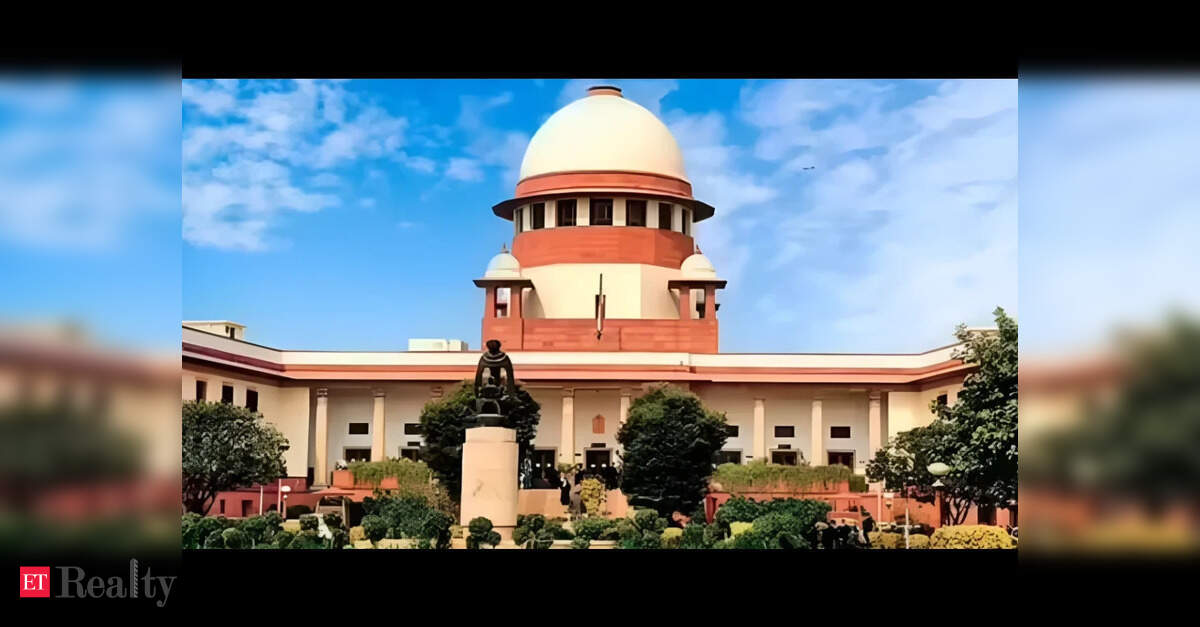
The Supreme Court is set to hear NBCC’s plea linked to RERA compliance in 16 stalled Supertech projects. Here’s what this means for homebuyers in Noida, Greater Noida and NCR.
Thousands of homebuyers across Noida, Greater Noida, Yamuna Expressway and the wider NCR have been tracking the future of stalled Supertech projects for years. A fresh legal development has now brought the spotlight back on project completion, RERA compliance and the practical path to delivery.
According to the source report, the Supreme Court has agreed to hear a plea filed by NBCC in relation to compliance with statutory provisions under the Real Estate (Regulation and Development) Act, 2016 for 16 stalled Supertech housing projects. The matter follows an earlier refusal by the National Company Law Appellate Tribunal (NCLAT) to grant any exemption from RERA compliance.
For buyers, this is not just a legal headline. It directly affects possession timelines, project execution, documentation, buyer confidence and the broader sentiment around stressed real-estate assets in NCR. The issue is especially relevant in micro-markets such as Noida, Greater Noida and the Yamuna Expressway corridor, where delayed housing inventory has had a long-term impact on end-users and investors.
In this article, we break down the development in plain language, identify the projects named in the report, and explain what homebuyers should watch next. Wherever a legal or procedural interpretation goes beyond the reported facts, it should be treated as informed commentary only. Independently verify before making an investment decision.
What has happened in the NBCC-Supertech matter?
The reported development is straightforward but important: the Supreme Court has agreed to hear NBCC’s plea after the NCLAT refused to grant any exemption from compliance with statutory provisions under RERA for the completion of 16 stalled Supertech projects.
Key reported facts
- NBCC has approached the Supreme Court against an NCLAT order.
- The issue concerns whether any exemption from RERA compliance can be granted in the course of completing stalled Supertech projects.
- The Supreme Court issued notice on the plea and sought responses from the Centre and an ex-director of Supertech, as per the report.
- The matter was stated to be listed for hearing on September 24.
- Earlier, on May 22, NCLAT said it was not competent to grant exemption from statutory compliance under RERA.
Why this matters
This is not a routine procedural step. It goes to the core of how a distressed residential project can be revived when multiple legal regimes overlap, including:
- RERA compliance requirements
- Insolvency and bankruptcy proceedings
- Court-monitored completion mechanisms
- Rights of existing allottees/homebuyers
Background from the report
The source says the Supreme Court had earlier upheld an NCLAT order asking NBCC to complete 16 housing projects of Supertech expeditiously. The court had also restrained other tribunals and high courts from passing orders that could stall the construction work.
This indicates that the judiciary is already treating completion of these projects as a matter of public and buyer interest. However, whether and how RERA-related compliance obligations may be addressed is now a separate legal issue before the apex court.
Important note: The report mentions the legal issue, but it does not spell out exactly which specific RERA provisions NBCC wants relief from or what form of exemption it is seeking in practice. That detail should be independently checked from court filings or official updates. Independently verify before making an investment decision.
Which Supertech projects are covered, especially in Noida and Greater Noida?
The report states that 16 housing projects comprising 49,748 homes are part of the broader completion plan, with around 27,000 homebuyers awaiting houses. These projects are spread across Uttar Pradesh, Uttarakhand, Haryana and Karnataka.
For buyers in NCR, the named projects are especially relevant because several are located in Noida, Greater Noida and Yamuna Expressway.
Projects mentioned under Phase 1 in the report
- Eco Village-2, Greater Noida
- Romano, Noida
- Capetown, Noida
- Czar Suites, Greater Noida
- Eco Village-3, Greater Noida
- Sports Village, Greater Noida
- Eco-citi, Noida
Projects mentioned under Phase 2 in the report
- Northeye, Noida
- Upcountry, Yamuna Expressway
- Eco Village-1, Greater Noida
- Meerut Sports City, Meerut
- Green Village, Meerut
Projects mentioned under Phase 3 in the report
- Hilltown, Gurugram
- Araville, Gurugram
- Rivercrest, Rudrapur
- Doon Square, Dehradun
- Micasa, Bengaluru
Why NCR micro-markets are central here
For Noida and Greater Noida, stalled projects create ripple effects far beyond the affected towers:
- Buyer confidence weakens in the micro-market
- Resale liquidity gets affected
- Rental demand may shift to delivered societies nearby
- Bank-funded buyers remain stuck with EMIs and rent together
- New launches in the same catchment face more scrutiny over delivery credibility
A quick location relevance table
| Micro-market | Projects named in report | Buyer relevance | |---|---|---| | Noida | Romano, Capetown, Eco-citi, Northeye | Possession uncertainty, resale and rental sentiment | | Greater Noida | Eco Village-1, 2, 3, Czar Suites, Sports Village | Large end-user impact, delayed completion concerns | | Yamuna Expressway | Upcountry | Important for plotted/villa and long-hold investors watching corridor maturity |
If you are an allottee in any of the above projects, the names appearing in a court-linked completion framework are significant. Still, it should not be read as an automatic possession guarantee until project-level execution, approvals, funding and compliance steps move on ground. Independently verify before making an investment decision.
What does the RERA exemption issue actually mean for homebuyers?
For many buyers, the phrase 'RERA exemption' can sound alarming. In practical terms, the issue appears to be about whether certain statutory compliance requirements under RERA can be relaxed or specially handled to enable completion of stalled projects under NBCC’s supervision.
What is clearly known from the report
- NBCC wants relief related to compliance with RERA provisions.
- NCLAT said it could not grant such exemption.
- The Supreme Court will now examine the issue.
What is not clearly explained in the source
The article does not define:
- the exact provision(s) involved,
- whether the request is project registration related, procedural, or operational,
- whether buyers’ substantive rights under RERA would be altered.
That distinction is critical.
Why buyers should separate two things
1. Completion facilitation
A court may consider legal flexibility if it helps revive a stuck project and protect homebuyers.
2. Buyer protection
RERA was enacted to improve transparency, accountability and timely delivery. Any change that affects disclosures, timelines, escrow discipline or allottee safeguards must be understood carefully.
A balanced way to read this development
It may be tempting to assume that any exemption is negative for buyers. That is not always true. In some distressed-project cases, a procedural relaxation could be sought simply to remove roadblocks and restart construction. On the other hand, if any relief materially weakens transparency or accountability, buyers would naturally have concerns.
Because the source does not provide the detailed legal prayer, the safest interpretation is this:
- Fact: A legal issue relating to RERA compliance is before the Supreme Court.
- Opinion/analysis: The outcome could either streamline completion or raise questions on buyer safeguards depending on the final structure of relief.
Homebuyers should therefore track official court updates, project-wise communication and, where relevant, RERA portal disclosures. Independently verify before making an investment decision.
What should existing allottees in Noida, Greater Noida and YEIDA watch now?
If you already own or have booked a unit in one of the affected projects, your focus should move from headlines to documented, project-specific monitoring.
1. Track court-driven milestones
The report mentions that construction for the 16 projects was to be started in a phased framework and that earlier judicial directions were aimed at expediting completion. Buyers should monitor:
- next hearing outcomes,
- any court-approved implementation roadmap,
- project-wise committee updates if publicly available,
- contractor appointment and mobilisation status.
2. Check project-level status, not just group-level news
In stressed developers, one project’s legal progress does not automatically translate into another project’s physical progress. Review:
- construction activity on site,
- labour and material movement,
- tower-wise completion status,
- pending external development,
- utility readiness,
- occupancy or completion-related approvals where applicable.
3. Keep your documentation organised
Allottees should preserve and update:
- allotment letter
- builder-buyer agreement
- payment receipts
- loan statements
- possession-related communication
- any court, insolvency or committee correspondence
These records become important in disputes related to dues, revised demands, delayed possession, registry or handover conditions.
4. Understand the difference between possession and registry
Even if a project restarts, buyers should not assume immediate eligibility for possession or registry. In NCR, practical readiness may depend on multiple factors such as:
- tower completion,
- common-area readiness,
- fire and safety compliance,
- authority approvals,
- dues settlement,
- association-level handover issues.
5. Watch the financial side carefully
Some allottees may eventually face fresh demand schedules or revised execution-linked payment requirements. The source does not mention any such framework yet, so buyers should avoid assumptions. Any demand raised should be verified against legal orders, contractual terms and official project communication.
Suggested buyer checklist
- Confirm whether your exact tower/unit falls within the active completion plan
- Review any latest NBCC or court-approved communication
- Compare site reality with announced progress
- Check whether your home loan lender has updated project status internally
- Consult a qualified property lawyer if any fresh undertaking or payment document is issued
For YEIDA and Yamuna Expressway buyers, especially in long-pending layouts, it is also wise to monitor land-use compliance, external connectivity and authority-side developments separately from builder-level court news.
What does this mean for NCR real-estate sentiment and future buyers?
This case matters beyond the affected projects because it reflects a larger NCR market reality: project delivery risk remains one of the biggest filters in homebuying decisions.
Market-level implications
Stronger due diligence culture
End-users today are more likely to check:
- RERA registration details
- litigation history
- land title clarity
- construction pace
- lender approvals
- past possession record of the developer
Preference for near-completion inventory
In Noida, Greater Noida and Yamuna Expressway, many buyers now prefer:
- ready-to-move homes,
- nearing-possession projects,
- societies with active RWAs or AOAs,
- projects with visible infrastructure and occupancy.
Reputation premium for execution
Developers with a clean delivery track record often command stronger trust, even when prices are higher than distressed or uncertain projects.
Lessons for new investors
If you are evaluating fresh investment in NCR, use this case as a reminder to assess not only brochure-level promise but execution resilience.
Key due diligence questions
- Is the project RERA registered and are updates current?
- Is the land freehold or leasehold, and what is the authority structure?
- What is the developer’s possession history in the same region?
- Are there unresolved court, insolvency or title issues?
- What is the realistic rental yield if possession gets delayed?
- Is your exit dependent only on capital appreciation, or is there end-user demand too?
A practical NCR buying approach
For buyers in Noida and Greater Noida, the smarter approach is often to compare three buckets:
| Option | Advantage | Risk | |---|---|---| | Ready-to-move | Lower possession uncertainty | Higher upfront cost | | Near-possession | Better balance of price and risk | Last-mile delay still possible | | Early-stage under-construction | Lower entry ticket in some cases | Highest execution risk |
This does not mean all under-construction projects are risky. It means buyers should assign a higher risk weight where the developer’s delivery record is mixed or where the legal situation is evolving.
How to protect yourself when buying in a delayed or legally complex project
Whether you are an existing allottee or a new buyer exploring a discounted opportunity, caution is essential in projects with a history of delay or litigation.
Legal and regulatory checks
Before paying a token or booking amount, verify:
- current RERA registration status
- sanctioned plan and layout details
- promoter details and past litigation
- land ownership or leasehold structure
- authority dues if relevant
- any insolvency, NCLT/NCLAT or Supreme Court proceedings
Commercial checks
Do not base your purchase decision only on an apparent bargain. Assess:
- total cost including PLC, parking, IFMS and club charges
- likely possession window based on site progress, not promises
- maintenance and fit-out readiness
- resale liquidity in the same sector
- actual rental demand and achievable rent
On-ground checks matter in NCR
In Noida, Greater Noida and YEIDA zones, physical verification is crucial. Visit the site and nearby sectors to assess:
- livability of the area
- approach roads and public transport access
- occupied societies nearby
- social infrastructure such as schools, hospitals and daily retail
- actual construction momentum
Do not ignore documentation after possession
A delayed project can create complications even after keys are offered. Buyers should review:
- possession letter terms
- delay compensation position, if any
- fit-out and snag list process
- maintenance agency details
- common-area delivery status
- timeline for registry where applicable
Final caution
A court-monitored revival can improve outcomes for stranded buyers, but it does not eliminate all execution risk. Every distressed project has its own legal and financial complexity. Treat broad market news as context, not as a substitute for project-specific due diligence. Independently verify before making an investment decision.
Key Takeaways
- The Supreme Court is set to hear NBCC’s plea related to RERA compliance for 16 stalled Supertech projects.
- Several named projects are in Noida, Greater Noida and Yamuna Expressway, making this highly relevant for NCR buyers.
- NCLAT had earlier refused to grant any exemption from statutory RERA compliance, saying it was not competent to do so.
- Homebuyers should track project-wise progress, court updates, documentation and site activity rather than rely on headlines alone.
- For new buyers, this case reinforces the need for strong due diligence on RERA status, legal risk and possession credibility.
Frequently Asked Questions
What is the latest update on the Supertech stalled projects?
As per the source report, the Supreme Court has agreed to hear NBCC’s plea concerning RERA compliance for completing 16 stalled Supertech projects. The matter follows an NCLAT order refusing to grant exemption from statutory compliance.
Which Supertech projects in Noida and Greater Noida are mentioned in the report?
The report names projects such as Romano, Capetown, Eco-citi and Northeye in Noida, and Eco Village-1, 2, 3, Czar Suites and Sports Village in Greater Noida. Upcountry on Yamuna Expressway is also mentioned.
Does this mean homebuyers will get possession soon?
Not automatically. The legal hearing is an important step, but actual possession depends on project-wise construction, approvals, funding and execution on the ground.
What does RERA exemption mean in this case?
The source says NBCC is seeking relief related to compliance with RERA provisions, but it does not detail the exact provisions or practical scope. Buyers should wait for official legal clarity and independently verify the implications.
Should investors consider buying in stressed or delayed projects because prices may be lower?
Lower entry price alone should not drive the decision. In delayed projects, legal complexity, possession risk, carrying cost and resale uncertainty can outweigh the apparent discount.
What should existing allottees do right now?
Keep all documents ready, monitor court and project updates, verify site progress and consult a property lawyer before responding to any new payment demand or revised documentation.
Conclusion
The NBCC-Supertech matter is a major regulatory and buyer-interest development for NCR real estate, especially in Noida, Greater Noida and Yamuna Expressway. The fact that the Supreme Court is examining the issue shows the seriousness of stalled housing projects and the need to balance legal compliance with completion for stranded homebuyers.
At the same time, buyers should remain realistic. A court hearing is not the same as possession, and a revival framework is not the same as finished, registrable housing stock. The most practical approach is to follow verified updates, check project-level progress and seek professional advice before taking any financial or legal step.
For future buyers, the larger lesson is clear: in NCR real estate, delivery track record and legal clarity matter as much as location and price. Good due diligence remains your strongest protection.
If you want help evaluating a delayed project, checking legal risk, or comparing safer options in Noida, Greater Noida or Yamuna Expressway, connect with NeeVAasha for a practical consultation or site visit plan.
Talk to Rahul directly.
Have a specific question about this topic? Book a no-obligation call with Neevaasha's founder — 15 years of NCR real-estate experience, one honest conversation.


